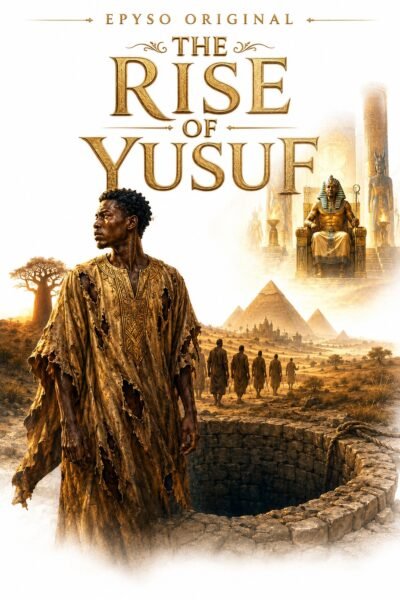
As dawn broke over the hills near Dothan, Yusuf had spent the entire night at the bottom of the dry well. His throat was parched, his body ached from the fall, and his spirit was crushed by his brothers’ betrayal. But he was still alive, and where there is life, there is hope.
Above ground, his brothers were waking up and preparing their morning meal. They acted as if nothing had happened, but Reuben was troubled. All night, he had planned to rescue Yusuf when the others were sleeping, but Simeon had insisted they take turns keeping watch. There had been no opportunity.
“We need to decide what to do next,” Reuben said carefully. He didn’t want to admit his rescue plan, so he tried a different approach. “We can’t leave him down there forever.”
“Why not?” asked Levi coldly. “He brought this on himself.”
“Because eventually someone will find him,” Reuben explained. “Travelers use this road. If they hear him calling for help and rescue him, he’ll tell them what we did. The story will spread, and our father will learn the truth.”
The brothers hadn’t thought of this. In their anger, they had acted without considering all the consequences.
“So what are you saying?” asked Judah.
“I’m saying we finish what we started,” said Simeon. “We can’t let him live to tell what happened.”
Reuben felt sick to his stomach. This was getting worse and worse. “There has to be another way.”
Just then, Dan, who was tending to the cattle on the hillside, came running back to camp with excitement.
“Brothers! Look!” He pointed to the horizon. “A caravan is coming this way!”
In the distance, they could see a long line of camels and merchants making their way along the trade route. Even from far away, they could tell it was a large group – probably Ishmaelite traders heading toward Egypt with goods to sell.
Judah’s eyes lit up with a sudden idea. “Brothers, I have a solution to our problem.”
“What kind of solution?” asked Reuben suspiciously.
“We sell him to the traders,” Judah said. “They’re always looking for young, strong slaves to sell in the Egyptian markets. We get rid of our problem, we don’t have his blood on our hands, and we even make some money from it.”
The brothers looked at each other. This idea appealed to them more than murder. They would be rid of Yusuf, but they wouldn’t technically be killers.
“How much do you think they’d pay for him?” asked Dan.
“A healthy young man like Yusuf? Probably twenty pieces of silver, maybe more,” Judah estimated.
Reuben wanted to object, but he realized this might actually be better than his original plan. If Yusuf was sold to traders heading to Egypt, at least he would be alive, even if he was far from home. Maybe somehow, someday, he could find his way back.
The caravan was getting closer. They could now see that it was indeed Ishmaelite merchants with their camels loaded with spices, perfumes, and other goods bound for the great markets of Egypt.
“It’s decided then,” said Judah. “We sell him.”
They pulled Yusuf up from the pit. The young man was weak from thirst and hunger, and his face was streaked with tears and dirt. When he saw sunlight again, hope flashed in his eyes.
“Thank you, brothers,” he gasped. “I knew you wouldn’t leave me down there to die.”
But his hope was short-lived. Instead of freeing him, they bound his hands with rope.
“What are you doing?” he asked in confusion.
“Solving our problem,” Simeon said grimly.
When the caravan reached their camp, the lead merchant, a weathered man named Malik, approached them.
“Peace be upon you, young men,” he said in greeting. “We are traveling to Egypt and wondered if you might have any cattle for sale. We could use fresh meat for our journey.”
“Peace be upon you as well,” replied Judah, stepping forward as the spokesman. “We don’t have cattle to spare, but we do have something else you might be interested in.”
Malik raised an eyebrow. “What might that be?”
Judah gestured toward Yusuf, who stood bound and trembling among them. “A slave. Young, strong, and healthy. He would fetch a good price in the Egyptian markets.”
Malik walked over and examined Yusuf like he was inspecting a piece of livestock. He felt his muscles, looked at his teeth, checked his hands for calluses.
“He doesn’t look like a slave,” Malik observed. “His skin is too soft, his hands too smooth. Where did you get him?”
“He’s a troublemaker from our village,” Judah lied smoothly. “His family sold him to us because they couldn’t control him.”
Yusuf wanted to cry out that this was his brother, that he was being betrayed by his own family, but fear kept him silent. What if the truth made things worse?
Malik continued his inspection. “He’s well-built and looks intelligent. The Egyptians like smart slaves – they can be trained for important work. I’ll give you fifteen pieces of silver for him.”
“Twenty,” Judah bargained.
“Eighteen, and that’s my final offer.”
“Done.”
And just like that, for eighteen pieces of silver, Yusuf was sold into slavery by his own brothers.
As the silver changed hands, Yusuf finally found his voice. “Brothers, please! Don’t do this! I’m your father’s son! What will you tell him?”
“We’ll tell him you were killed by wild animals,” said Simeon without emotion. “And here’s the proof.”
He held up Yusuf’s beautiful agbada, now torn and stained with goat’s blood they had prepared for this deception.
The reality of what was happening finally hit Yusuf completely. His brothers weren’t just angry with him – they truly hated him enough to sell him into slavery and lie to their father about his death. The dreams that had seemed so promising now felt like a cruel joke.
As the traders bound him with chains and loaded him onto one of their camels, Yusuf took one last look at his brothers. They stood watching with hard faces, showing no sign of regret or sorrow.
“May God forgive you,” Yusuf whispered. “Because I don’t know if I ever can.”
The caravan began to move, and with each step of the camel, Yusuf was carried farther away from everything he had ever known. Behind him, his brothers were already planning how they would deceive their father. Ahead of him lay the unknown land of Egypt and a future he could never have imagined.
As they traveled, Malik rode alongside Yusuf’s camel.
“What’s your name, boy?” he asked.
“Yusuf,” came the quiet reply.
“Well, Yusuf, let me give you some advice. Egypt is a land of opportunity, but also of great danger. If you’re smart and keep your head down, you might survive. If you cause trouble, you’ll wish you were dead. The choice is yours.”
Yusuf nodded, but his mind was spinning with questions. Why had God allowed this to happen? What was the purpose of all this suffering? How could his dreams of greatness lead to chains and slavery?
But even in his despair, that spark of faith deep inside him refused to die. Somehow, someway, he still believed that God had a plan for his life. He just couldn’t see it yet.
The caravan continued south toward Egypt, carrying with it a young man who had no idea that his journey through slavery would eventually lead him to become one of the most powerful people in the ancient world.
Lesson from Episode 4: Sometimes the worst betrayals come from those who should love us most. Yusuf’s brothers chose temporary satisfaction over permanent relationships. Their jealousy led them to make decisions that would haunt them for years to come. But notice that even in the midst of betrayal and injustice, Yusuf maintained his dignity and his faith. He didn’t become bitter or vengeful, even though he had every right to be. This strength of character would serve him well in the trials ahead.
Reading settings
Made for how you read. Saved on this device.
0 Comments — Be the first to share your thoughts!
No comments yet. Be the first to leave one!