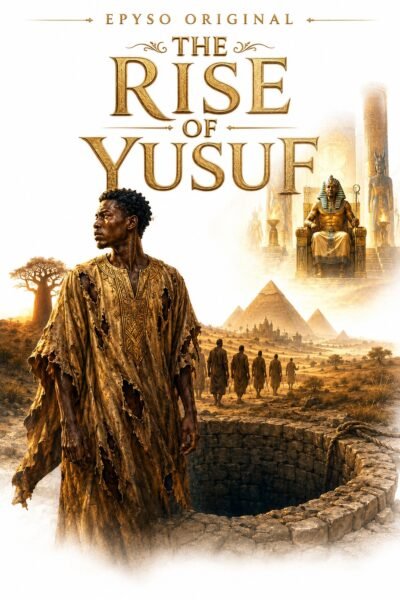
Two more years crawled by in the darkness of the prison. Yusuf was now twenty-five years old, and it had been seven long years since his brothers sold him into slavery. The young man who had once worn beautiful robes and shared dreams with excitement was now a seasoned prisoner who had learned to find purpose even in the most difficult circumstances.
But he never stopped believing that God had a plan for his life, even though that plan seemed more impossible with each passing day.
Then, one morning, everything changed.
It started with unusual activity in the palace above. Pharaoh had spent a restless night, troubled by two vivid dreams that had left him confused and anxious. These weren’t ordinary dreams – they had the feeling of divine messages, the kind that demanded interpretation.
Pharaoh immediately summoned all his magicians and wise men, the professional dream interpreters who served the royal court. These were learned men who had studied ancient texts and claimed to understand the language of the gods.
But when Pharaoh described his dreams to them, they were stumped. They offered various interpretations, but none of them felt right to the king. Something about these dreams was different, more urgent and significant than anything they had encountered before.
Pharaoh was growing increasingly frustrated and worried when Ashur, his chief cupbearer, suddenly remembered something that made his blood run cold.
Two years ago, when he had been imprisoned on suspicion of treason, there had been a Hebrew slave in the prison who had interpreted dreams with perfect accuracy. Ashur had promised to mention this man to Pharaoh, but in his relief at being restored to his position, he had completely forgotten about it.
Until now.
“My lord,” Ashur said nervously, approaching Pharaoh’s throne, “I remember something that might be helpful. When I was in prison two years ago, there was a young Hebrew man there who could interpret dreams. He told me exactly what would happen to me and to the baker who was imprisoned with me, and everything came true just as he said.”
Pharaoh’s eyes lit up with interest. “A Hebrew who interprets dreams? Where is this man now?”
“Still in prison, my lord. He was falsely accused of attacking his master’s wife. But his gift for understanding dreams is genuine – I’ve seen it with my own eyes.”
“Bring him to me immediately,” Pharaoh commanded.
Guards were dispatched to the prison with urgent orders to bring Yusuf to the palace at once. When they arrived at the prison gates, Warden Mahu was confused by the sudden interest in his most trusted prisoner.
“Pharaoh wants to see Yusuf?” he asked in amazement.
“Immediately,” the guard captain replied. “Prepare him for a royal audience.”
When the guards came to Yusuf’s cell, he was as surprised as anyone. After seven years of captivity, he had learned not to expect sudden changes in his circumstances.
“What’s happening?” he asked.
“Pharaoh wants to see you,” the guard replied. “Something about interpreting dreams.”
Yusuf’s heart began to race. Could this be the opportunity he had been waiting for all these years?
The guards brought him to the prison’s bathing area, where he was allowed to wash and shave properly for the first time in years. They provided him with clean clothes – simple but decent garments appropriate for appearing before royalty.
As he prepared himself, Yusuf prayed quietly. “God, if this is the opportunity you’ve been preparing me for, please give me wisdom. Help me to serve you faithfully, whatever happens.”
The journey from the prison to Pharaoh’s palace was like traveling between two different worlds. Yusuf, who had seen nothing but prison walls for three years, was amazed by the grandeur of the royal court. The palace was enormous, with towering columns, beautiful wall paintings, and courtyards filled with exotic plants and fountains.
Everywhere he looked, there were signs of wealth and power beyond anything he had ever imagined. Guards in gleaming armor stood at attention, nobles dressed in fine linen moved through the corridors, and servants hurried about their duties with practiced efficiency.
When Yusuf was finally brought before Pharaoh, he found himself in a massive throne room decorated with gold and precious stones. The king himself was an imposing figure, wearing the traditional crown of Egypt and robes that sparkled with golden threads.
Pharaoh studied this Hebrew prisoner who had been brought before him. Yusuf was clearly not Egyptian – his features and coloring marked him as a foreigner. But there was something impressive about him despite his simple clothes and obvious status as a prisoner. He carried himself with quiet dignity and met the king’s gaze without fear or servility.
“I have been told that you can interpret dreams,” Pharaoh said without preamble.
Yusuf knew this was the most important moment of his life. His answer to this question would determine not only his immediate fate, but possibly the course of his entire future.
“I cannot do it myself, Your Majesty,” he replied respectfully, “but God will give Pharaoh a favorable answer.”
This response impressed Pharaoh. Most people brought before him either boasted about their own abilities or cowered in fear. This young man showed confidence without arrogance, and he gave credit to his God rather than claiming personal power.
“Very well,” Pharaoh said. “Let me tell you my dreams.”
The entire court fell silent as the king began to speak.
“In my first dream, I was standing by the Nile River. Seven fat, healthy cows came up out of the river and began grazing in the marsh grass. Then seven other cows came up after them – thin, sickly cows unlike any I’ve ever seen in Egypt. The thin cows ate up the seven fat cows, but afterward they still looked as thin and sickly as before. Then I woke up.”
Pharaoh paused, and Yusuf could see the troubled expression on his face.
“Then I had a second dream. I saw seven heads of grain growing on a single stalk – full, ripe, and good. After them, seven other heads sprouted, but these were thin and scorched by the desert wind. The thin heads swallowed up the seven good heads. I told these dreams to my magicians, but none of them could explain what they mean.”
As Pharaoh spoke, Yusuf felt the familiar sensation of divine understanding washing over him. The meaning of the dreams became as clear as if someone had explained it to him in simple words.
“Your Majesty,” Yusuf said confidently, “both dreams have the same meaning. God is revealing to you what he is about to do. The seven good cows and the seven good heads of grain represent seven years of great abundance throughout Egypt. The seven thin cows and the seven scorched heads of grain represent seven years of famine that will follow.”
Murmurs rippled through the throne room. Pharaoh leaned forward intently.
“The famine will be so severe that it will completely consume all the abundance of the good years,” Yusuf continued. “The reason the dream was given to you twice is because this matter has been firmly decided by God, and He will make it happen soon.”
Pharaoh’s face was grave. A seven-year famine would be catastrophic for Egypt and all the surrounding nations. Millions of people could die if the country wasn’t prepared.
“What should I do?” he asked.
Here was Yusuf’s moment. Not only could he interpret the dream, but God had also given him wisdom about what should be done.
“Your Majesty should look for a wise and discerning man and put him in charge of preparing Egypt for this crisis. Let him appoint officers throughout the land to collect one-fifth of all the grain produced during the seven years of abundance. This grain should be stored in the cities under your authority and carefully guarded. Then, when the famine comes, Egypt will have enough food to survive.”
The logic of this plan was immediately obvious to everyone in the throne room. It was practical, achievable, and it could save the nation.
Pharaoh discussed the proposal quietly with his advisors, then turned back to Yusuf.
“This is an excellent plan,” he said. “But who could I trust with such an enormous responsibility?”
He looked around the room at his nobles and officials, then his gaze returned to Yusuf.
“Can we find anyone better than this man, in whom is the spirit of God?” he asked his counselors.
Then, to everyone’s amazement, Pharaoh stood up and addressed Yusuf directly.
“Since God has shown you all this, there is no one as wise and discerning as you. You shall be in charge of my household, and all my people shall obey your orders. Only I, as king, will be greater than you.”
The court erupted in surprised whispers. Pharaoh was appointing a Hebrew prisoner to be second in command over all of Egypt!
But Pharaoh wasn’t finished. He removed his royal signet ring and placed it on Yusuf’s finger. He had him dressed in robes of fine linen and placed a gold chain around his neck.
“I hereby put you in charge of the whole land of Egypt,” Pharaoh declared. “You shall ride in my second chariot, and people will bow before you wherever you go. I am Pharaoh, but without your permission, no one will lift hand or foot in all Egypt.”
Pharaoh also gave Yusuf an Egyptian name – Zaphenath-Paneah, which meant “God speaks and lives” – and arranged for him to marry Asenath, the daughter of a prominent Egyptian priest.
In a single day, Yusuf had gone from being a forgotten prisoner to being the second most powerful man in the most powerful nation on earth.
As he stood in the throne room, wearing royal robes and receiving the bows of Egyptian nobles, Yusuf thought about the long journey that had brought him to this moment. The betrayal by his brothers, slavery in Potiphar’s house, false accusation, years in prison – it had all been preparing him for this day.
Those dreams he had shared as a seventeen-year-old boy – about the sun, moon, and stars bowing down to him – suddenly didn’t seem so impossible anymore.
Lesson from Episode 9: God’s timing is perfect, even when we can’t see it. Yusuf’s years of suffering weren’t wasted time – they were preparation time. His experiences as a slave taught him administration, his time in prison taught him patience and discernment, and his gift for interpreting dreams opened the door to his destiny. Sometimes what looks like the end of our story is actually just the beginning of the most important chapter.
Reading settings
Made for how you read. Saved on this device.
0 Comments — Be the first to share your thoughts!
No comments yet. Be the first to leave one!