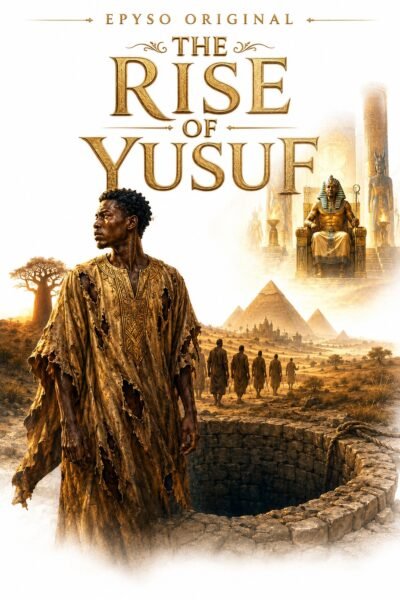
At thirty years old, Yusuf began the most important work of his life. As vizier of Egypt, second only to Pharaoh himself, he had the authority and resources to prepare an entire nation for the catastrophe that was coming.
The first thing he did was organize a massive administrative system throughout Egypt. He divided the country into districts and appointed supervisors in every region. These men were responsible for collecting and storing one-fifth of all grain produced during the abundant years.
It was an enormous undertaking that required careful planning and flawless execution. Yusuf designed a network of storage facilities – huge granaries built of stone that could preserve grain for many years. He established strict accounting systems to track exactly how much food was collected and stored in each location.
The Egyptian people were initially skeptical. Why should they give up a fifth of their harvest when food was plentiful? Some complained that this new Hebrew vizier was being too cautious.
But Yusuf was patient and persistent. He traveled throughout Egypt, explaining the situation to local officials and ensuring that his orders were carried out properly. His years of managing Potiphar’s household and the king’s prison had taught him how to organize complex operations and motivate people to work toward a common goal.
During these busy years, Yusuf’s personal life also flourished. He married Asenath, and they had two sons. He named the first one Manasseh, which means “God has made me forget all my troubles and all my father’s household.” The second son he named Ephraim, meaning “God has made me fruitful in the land of my suffering.”
These names reflected Yusuf’s state of mind during the abundant years. He was grateful for his new life and determined to focus on the future rather than dwelling on the past. But even as he said God had made him forget his father’s household, deep in his heart he never truly forgot. Sometimes, in quiet moments, he would wonder about his father Ibrahim and whether the old man still mourned for his lost son.
The seven years of abundance were exactly as the dream had predicted. The Nile River provided perfect irrigation, the weather was ideal for farming, and crops grew in unprecedented quantities. Egypt became the envy of all surrounding nations as grain filled every storehouse.
But Yusuf never let the prosperity make him complacent. Every year, as the abundant harvests came in, he made sure that exactly one-fifth was collected and stored. By the end of the seven years, Egypt had accumulated grain reserves unlike anything the world had ever seen.
Then, just as the dream had foretold, the abundance came to an end.
The eighth year brought drought. The Nile, which had always been reliable, began to run lower than anyone could remember. The annual floods that normally fertilized Egypt’s farmland were weak and insufficient. Crops withered in the fields, and what little grain was harvested was of poor quality.
At first, people weren’t too worried. Egypt had experienced dry years before, and they assumed things would return to normal soon. But as months passed with no relief, anxiety began to spread throughout the land.
By the second year of famine, people were desperate. The little grain they had stored privately was running out, and there was no new harvest to replace it. Families who had been comfortable were now facing hunger.
That’s when Yusuf’s preparations proved their worth.
“Open the storehouses,” he ordered his officials. “Begin selling grain to anyone who needs it.”
The massive granaries that had been filled during the abundant years were opened, revealing mountains of perfectly preserved grain. The storage and preservation systems that Yusuf had designed worked flawlessly – the grain was as fresh and nutritious as the day it had been harvested.
Word spread quickly throughout Egypt: there was food available in the royal storehouses. People came from every corner of the country, bringing whatever money or goods they had to trade for grain. Yusuf’s officials sold the grain fairly and efficiently, ensuring that even poor families could afford enough to survive.
But the famine wasn’t limited to Egypt. The drought had affected the entire region – Canaan, Syria, Arabia, and all the surrounding lands were suffering from crop failures and food shortages.
Soon, foreigners began arriving in Egypt, hoping to buy grain. Merchants, farmers, and even nobles from other countries made the difficult journey to the land of the Nile, because Egypt was the only place where food was still available.
Yusuf had not only saved Egypt – he had positioned the country to become wealthy by selling grain to desperate neighbors. The silver and goods that poured in from foreign buyers made Egypt richer than ever, even in the midst of famine.
But among all these foreign visitors, there was one group that Yusuf was not expecting to see.
One morning, as he sat in his official chambers reviewing grain distribution reports, his secretary brought him news that made his heart stop.
“My lord, there are ten men from Canaan asking to buy grain. They say they are brothers, sons of a man named Ibrahim, and they’ve come from the region around Hebron.”
Yusuf’s hands trembled as he set down the papyrus he was reading. Brothers from Canaan. Sons of Ibrahim. It could only be them – the brothers who had sold him into slavery thirteen years ago.
“Bring them to me,” he said, his voice carefully controlled.
As he waited for them to arrive, Yusuf’s mind raced with emotions and memories. Part of him was excited – these were his brothers, his flesh and blood! Perhaps his father was still alive. Perhaps he would finally get news of his family.
But another part of him was angry. These were the same men who had thrown him into a pit, sold him to traders, and lied to their father about his death. They had caused him years of suffering and had probably never felt a moment’s guilt about it.
When the ten men were brought into his chamber, Yusuf recognized them immediately, though they were older and weathered by years of hard work. There was Reuben, the eldest, still trying to be the responsible leader. There was Simeon, whose violent temper had led the plot against Yusuf. There was Judah, who had suggested selling him to the traders.
But they didn’t recognize him at all. The teenage boy they had sold was now a thirty-seven-year-old man dressed in Egyptian royal robes, with his face painted in the Egyptian style and his hair cut according to Egyptian fashion. He looked and sounded like a high-ranking Egyptian official.
The brothers threw themselves down before him, bowing their faces to the ground in the respectful manner required when meeting Egyptian royalty.
As Yusuf looked down at his brothers prostrating themselves before him, he remembered his boyhood dreams – the sun, moon, and stars bowing down to him. Here it was, happening exactly as God had shown him twenty years ago.
“Where do you come from?” he asked them in Egyptian, speaking through an interpreter so they wouldn’t recognize his voice.
“From the land of Canaan,” Reuben replied respectfully. “We have come to buy food.”
“You are spies!” Yusuf declared harshly. “You have come to see where our land is unprotected!”
The brothers looked terrified. Being accused of espionage in Egypt was a death sentence.
“No, my lord!” Judah protested. “We are honest men. We have simply come to buy food for our families.”
“Tell me about yourselves,” Yusuf demanded, enjoying their discomfort more than he probably should have.
“We are twelve brothers, sons of one father, in the land of Canaan,” Reuben explained. “The youngest is now with our father, and one brother is… is dead.”
Dead. So that’s what they had told their father. Yusuf felt a pang of grief thinking about old Ibrahim mourning for a son who was actually alive and successful.
“You are spies,” Yusuf repeated. “But I’ll give you a chance to prove your honesty. One of you will stay here in prison. The rest of you will go back to Canaan and bring this youngest brother you spoke of. If you’re telling the truth about being honest men, you’ll return with him. If you don’t come back, I’ll know you were lying.”
The brothers looked at each other with panic. This was turning into a nightmare.
After some discussion, Yusuf modified his demand. “Actually, I’ll keep one of you here and let nine return. But you must bring back your youngest brother, or the one who stays will be executed as a spy.”
He pointed at Simeon, the brother whose violent temper had caused Yusuf the most pain years ago. “This one stays.”
As the guards bound Simeon and led him away, the remaining brothers spoke among themselves in Hebrew, not knowing that Yusuf understood every word.
“This is all happening because of what we did to our brother,” Reuben said miserably. “We saw his anguish when he begged us for mercy, but we wouldn’t listen. Now God is punishing us.”
“I told you we shouldn’t hurt the boy,” Judah added. “But you wouldn’t listen to me.”
Hearing them acknowledge their guilt after all these years affected Yusuf more than he had expected. He had to turn away so they wouldn’t see the tears in his eyes.
He ordered his servants to fill their grain sacks and secretly return their money to them, then sent them on their way back to Canaan.
As he watched them leave, Yusuf wondered what would happen next. Would they return with Benjamin, his beloved younger brother? Would his father still be alive? And what would he do when they came back?
For the first time in years, Yusuf didn’t have a clear plan. His heart was torn between love and anger, between the desire for reunion and the need for justice.
But one thing was certain – this was only the beginning of a confrontation that had been twenty years in the making.
Lesson from Episode 10: Sometimes God allows us to be in positions where we can choose between revenge and mercy. Yusuf had every right to be angry with his brothers, and he had the power to punish them severely. But having power doesn’t always mean we should use it for revenge. The real test of character comes when we have the ability to hurt those who have hurt us. What we do in those moments reveals who we really are.
Reading settings
Made for how you read. Saved on this device.
0 Comments — Be the first to share your thoughts!
No comments yet. Be the first to leave one!