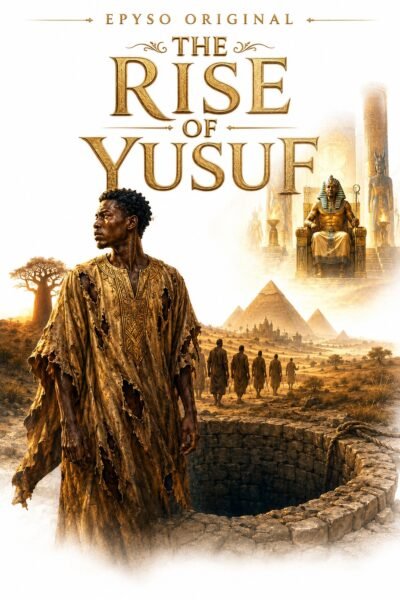
Judah stood before the Egyptian official who held the power of life and death over his family. His heart was breaking as he thought about his father Ibrahim back home, waiting anxiously for news of his beloved Benjamin.
“My lord,” Judah began, his voice steady despite his inner turmoil, “please let your servant speak plainly to you, and do not be angry with me, though you are as powerful as Pharaoh himself.”
Yusuf sat motionless on his throne, but inside his heart was racing. This was his brother Judah – the same man who had suggested selling him to the slave traders twenty-two years ago. What would he say now?
“You asked your servants, ‘Do you have a father or a brother?'” Judah continued. “And we answered, ‘We have an aged father, and there is a young son born to him in his old age. His brother is dead, and he alone is left of his mother’s children, and his father loves him dearly.'”
As Judah spoke, Yusuf could see the pain in his eyes. These weren’t the hard, jealous men who had betrayed him years ago. Something had changed in them.
“Then you said to your servants, ‘Bring him down to me so I can see him with my own eyes.’ And we said to you, ‘The boy cannot leave his father; if he leaves him, his father will die.’ But you told your servants, ‘Unless your youngest brother comes down with you, you will not see my face again.'”
Judah’s voice began to crack with emotion as he continued.
“When we went back to your servant my father, we told him what you had said. Then our father said, ‘Go back and buy a little more food.’ But we said, ‘We cannot go down. Only if our youngest brother is with us will we go. We cannot see the man’s face unless our youngest brother is with us.'”
Yusuf watched as tears began to flow down Judah’s face.
“Your servant my father said to us, ‘You know that my wife bore me two sons. One of them went away from me, and I said, “He has surely been torn to pieces.” And I have not seen him since. If you take this one from me too and harm comes to him, you will bring my gray head down to the grave in misery.'”
The mention of his father’s grief hit Yusuf like a physical blow. All these years, Ibrahim had mourned for him, never knowing his son was alive and successful in Egypt.
“So now,” Judah continued, his voice growing stronger, “if the boy is not with us when I go back to your servant my father, and if my father, whose life is closely bound up with the boy’s life, sees that the boy isn’t there, he will die. Your servants will bring the gray head of our father down to the grave in sorrow.”
Judah paused, gathering himself for what he was about to say next.
“Your servant guaranteed the boy’s safety to my father. I said, ‘If I do not bring him back to you, I will bear the blame before you, my father, all my life.'”
Then Judah said the words that broke Yusuf’s heart completely:
“Now then, please let your servant remain here as my lord’s slave in place of the boy, and let the boy return with his brothers. How can I go back to my father if the boy is not with me? No, do not let me see the misery that would come on my father.”
The throne room was silent except for the sound of Judah’s weeping. Here was the same man who had once suggested selling his brother into slavery, now offering to become a slave himself to save another brother. The transformation was complete and genuine.
Yusuf could no longer control his emotions. The test was over, and his brothers had passed with flying colors. They were no longer the jealous, bitter men who had betrayed him. They had learned to love sacrificially, to put family above self-interest.
“Have everyone leave my presence!” Yusuf commanded his servants in Egyptian.
The Egyptian officials, guards, and servants quickly filed out of the room, leaving Yusuf alone with his brothers. When the last person had gone, Yusuf broke down completely.
He wept so loudly that his cries could be heard throughout the palace. The Egyptians and even Pharaoh’s household heard about it.
Then, speaking in Hebrew for the first time in twenty-two years, Yusuf said the words that would change everything:
“I am Yusuf! Is my father still alive?”
The brothers were terrified. This powerful Egyptian official was their brother Yusuf? The boy they had sold into slavery was now the second ruler of Egypt?
They were so shocked they couldn’t answer him.
“Come close to me,” Yusuf said gently, seeing their fear.
When they had moved closer, he said again, “I am your brother Yusuf, the one you sold into Egypt. And now, do not be distressed and do not be angry with yourselves for selling me here, because it was to save lives that God sent me ahead of you.”
The brothers stared at him in amazement. This was impossible. Yet as they looked more closely, they could see familiar features beneath the Egyptian makeup and royal clothes. This really was their brother Yusuf.
“For two years now there has been famine in the land,” Yusuf continued, “and for the next five years there will be no plowing and reaping. But God sent me ahead of you to preserve for you a remnant on earth and to save your lives by a great deliverance. So then, it was not you who sent me here, but God. He made me father to Pharaoh, lord of his entire household and ruler of all Egypt.”
Yusuf embraced Benjamin first, weeping freely. Then he embraced each of his other brothers in turn. Years of pain, separation, and misunderstanding melted away in those moments of reunion.
“Now hurry back to my father,” Yusuf told them, “and say to him, ‘This is what your son Yusuf says: God has made me lord of all Egypt. Come down to me; don’t delay. You shall live in the region of Goshen and be near me – you, your children and grandchildren, your flocks and herds, and all you have. I will provide for you there, because five years of famine are still to come. Otherwise you and your household and all who belong to you will become destitute.'”
He looked at each of his brothers with love and forgiveness in his eyes.
“You can see for yourselves, and so can my brother Benjamin, that it is really I who am speaking to you. Tell my father about all the honor accorded me in Egypt and about everything you have seen. And bring my father down here quickly.”
When Pharaoh heard that Yusuf’s family had been found, he was delighted. “Tell your brothers, ‘Do this: Load your animals and return to the land of Canaan, and bring your father and your families back to me. I will give you the best of the land of Egypt and you can enjoy the fat of the land.’ You are also directed to tell them, ‘Take some carts from Egypt for your children and your wives, and get your father and come. Never mind about your belongings, because the best of all Egypt will be yours.'”
Yusuf gave his brothers provisions for their journey, new clothes, and silver. To Benjamin he gave three hundred shekels of silver and five sets of clothes. To his father he sent ten donkeys loaded with the best things of Egypt, and ten female donkeys loaded with grain and bread and other provisions.
As his brothers prepared to leave, Yusuf gave them one final instruction: “Don’t quarrel on the way!”
He knew his brothers well enough to know they might spend the entire journey home arguing about who was to blame for what had happened years ago.
When the brothers arrived back in Canaan and told Ibrahim that Yusuf was still alive and was ruler of all Egypt, the old man’s heart nearly stopped.
“Yusuf is still alive?” he whispered. “My son is alive?”
At first he didn’t believe them. But when he saw the carts that Yusuf had sent to carry him, and when he heard all the details of their reunion, hope began to dawn in his ancient heart.
“I’m convinced!” Ibrahim declared. “My son Yusuf is still alive! I will go and see him before I die.”
And so the family of Ibrahim prepared for the journey to Egypt, where they would be reunited with the son and brother they had thought was lost forever.
The boy who had once shared dreams about stars bowing down to him had become a man whose wisdom and leadership would save not only his own family, but entire nations from starvation. His dreams had finally come true, but in ways far more wonderful than he could ever have imagined.
Lesson from Episode 12: Forgiveness is not about forgetting the past or pretending that wrong things never happened. It’s about choosing to see God’s bigger plan and trusting that He can bring good from even the worst situations. Yusuf didn’t minimize his brothers’ betrayal, but he was able to see how God had used it for a greater purpose. When we can see our pain from God’s perspective, we find the strength to forgive and the wisdom to move forward.
Reading settings
Made for how you read. Saved on this device.
0 Comments — Be the first to share your thoughts!
No comments yet. Be the first to leave one!